.
Herein, what was the impact of the assembly line?
The immediate impact of the assembly line was revolutionary. The use of interchangeable parts allowed for continuous workflow and more time on task by laborers. Worker specialization resulted in less waste and a higher quality of the end product. Sheer production of the Model T dramatically increased.
One may also ask, how did the assembly line impact the economy? The assembly line sped up the manufacturing process dramatically. It allowed factories to churn out products at a remarkable rate, and it also managed to reduce labor hours—benefiting many workers who used to spend 10 to 12 hours a day in the factory trying to meet quotas.
Also know, how did the assembly line impact the industrial revolution?
As such, the development of the assembly line method in the Industrial Revolution sped up production and simplified the manufacturing of goods. The explosion of centralized factories in the Industrial Revolution made for perfect environment for the development of the assembly line as a method of production.
How does the moving assembly line reduce the time it takes to build a car?
On December 1, 1913, Henry Ford installs the first moving assembly line for the mass production of an entire automobile. His innovation reduced the time it took to build a car from more than 12 hours to two hours and 30 minutes.
Related Question AnswersWhy is the assembly line so important?
The Importance of the Assembly Line The assembly line was important during this time due to its purpose in mass production. It allowed vehicles to be produced less expensively for both the consumer and the company. It saved the companies money by helping them pay less for their labor per vehicle produced.What was the key benefit of the assembly line?
The assembly line was one of the key components of the Industrial Revolution. The principles of the assembly line allowed manufacturers to produce greatly increased amounts of products at lower cost and indirectly made for easier maintenance of products after their assembly.What is made on an assembly line?
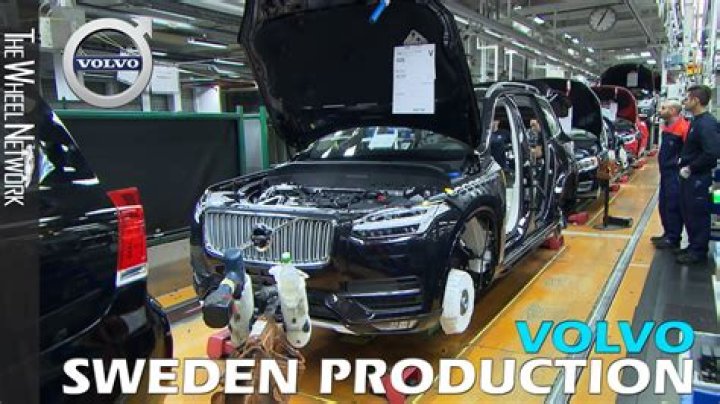
Assembly Line Methods. An assembly line is a manufacturing process in which interchangeable parts are added to a product in a sequential manner to create an end product. The workers and machinery used to produce the item are stationary along the line and the product moves through the cycle, from start to finish.How do you make an assembly line more efficient?
How to Boost the Efficiency of Your Production Line- Understanding your production line. A lot of business owners have a surprisingly small lack of knowledge about what it is they produce.
- Collect data on the raw materials.
- Keep a close eye on sales.
- Making improvements on the end product.
- Track your inventory as closely as you can.
How did mass production impact society?
Once mass production was developed and perfected, consumer goods could be made for the broadest possible market. Anything consumers needed or desired could be made in larger quantities. Mass production resulted in lower prices of consumer goods.Who started the assembly line?
Ransom E. OldsWhere was the assembly line invented?
The moving assembly line was developed for the Ford Model T and began operation on October 7, 1913, at the Highland Park Ford Plant, and continued to evolve after that, using time and motion study.How many Model A Fords still exist?
Have you ever wondered how many Model A's still survive today? Of the Ford TriMotor planes built (199), there are 8 still in existence.What is the assembly line in the Industrial Revolution?
Assembly line, industrial arrangement of machines, equipment, and workers for continuous flow of workpieces in mass-production operations. The design for an assembly line is determined by analyzing the steps necessary to manufacture each product component as well as the final product.What are the pros and cons of working on an assembly line?
What Are the Pros and Cons of Assembly Line Production?- Workers in an assembly line can become tired of monotonous work.
- Highly technical and expensive products can be made much cheaper using mass production via assembly lines.
- Products made on assembly lines can seldom have customization such as those specialty-made by a craftsman.
How did the assembly line impact the economy of the 1920s?
The assembly line helped Ford reduce labor costs within the production process by moving the product from one team of workers to the next, each of them completing a step so simple that workers had to be—in Ford's words—“no smarter than an ox.” Ford's reliance on the assembly line placed emphasis on efficiency overWhat companies use the assembly line?
Assembly Line Manufacturers and Companies- Fusion Systems Group Willoughby, OH 800-626-9501440-602-5510.
- ACRO Automation Systems, Inc.
- Actionpac Scales & Automation, Inc.
- Adaptek Systems Fort Wayne, IN 260-637-8660.
- Adescor Inc.
- Advanced Automation of California Yorba Linda, CA 714-692-9003.
How did the assembly line improve production during the Industrial Revolution?
Henry Ford improved upon the assembly line concept by using the moving platforms of a conveyor system. In this system the chassis of the vehicle was towed by a rope that moved it from station to station in order to allow workers to assemble each part.How do I set up an assembly line?
How to Set Up a Simple Production Line- Set up an adequate work area. You'll need to have enough physical space in which to set up your production line.
- Assemble all necessary materials.
- Designate start and end points.
- Create small work stations.
- Distribute materials to each workstation.
- Get to work.